Effects of Gooning on the Brain
Gooning is an internet slang term, not a scientific concept. There are no studies that directly examine “gooning” as a behavior. However, people often ask about its effects on the brain because it is described as prolonged, repetitive, and highly immersive.
To understand what may be happening neurologically, researchers look at related areas such as reward learning, attention, habit formation, and compulsive behavior. These fields help explain why certain experiences feel absorbing and why disengaging can sometimes be difficult.
The Brain’s Reward System
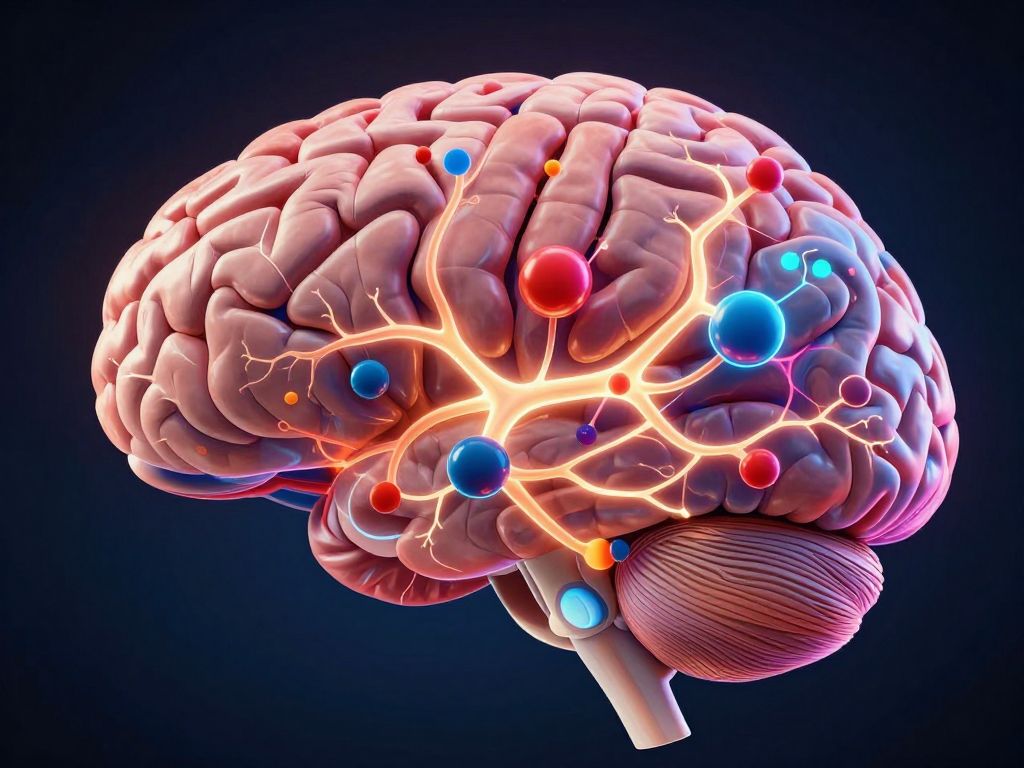
The brain’s reward system helps guide motivation and learning. One of its key components involves dopamine, a neurotransmitter that plays a role in signaling what is worth paying attention to and repeating.
Dopamine is not simply a “pleasure chemical”. Research shows that it is more closely related to motivation, anticipation, and reinforcement learning
Neuroscience review on dopamine and reward learning
When a behavior is repeatedly paired with strong reward signals, the brain becomes more efficient at predicting and seeking that experience. This process is central to habit formation and applies to many activities, including eating, gaming, social media use, and sexual stimulation.
Sexual Stimuli and Brain Activation
Neuroimaging studies show that sexual stimuli activate brain regions involved in reward and salience, including the nucleus accumbens, amygdala, and parts of the prefrontal cortex.
One study published in Neuropsychopharmacology found that sexual cues can activate reward circuits even with minimal conscious awareness
Brain imaging study on sexual cues
This helps explain why prolonged exposure to stimulating content can feel absorbing. The brain is repeatedly reinforcing attention toward the same type of input.
Attention Narrowing and Absorption
Many descriptions of gooning emphasize intense focus and reduced awareness of time or surroundings. Research on attention shows that highly stimulating or novel inputs can narrow attentional scope.
Studies on motivated attention demonstrate that reward-linked stimuli capture attention more strongly and hold it for longer periods
Review on motivated attention and reward
In practical terms, this means that when stimulation is repetitive and highly salient, attention can become locked onto it. This is not unique to sexual behavior and is also observed in gaming, scrolling behavior, and other digital activities.
Repetition, Learning, and Neural Plasticity
The brain is plastic, meaning it adapts based on repeated experiences. Reinforcement learning strengthens neural pathways that support behaviors that are frequently repeated.
Research on learning and plasticity shows that repeated reward-based behavior can change how strongly certain cues trigger motivation and attention
Overview of neural plasticity and learning
These changes are generally not permanent. Neural adaptations can weaken when behavior patterns change, which is why habits can be modified over time.
Compulsion and Loss of Control
Some people report difficulty stopping once deeply engaged in prolonged stimulation. Research on compulsive sexual behavior offers useful context here.
Reviews of compulsive sexual behavior suggest altered functioning in brain regions related to reward processing and impulse control, particularly when behaviors become distressing or interfere with daily life
World Psychiatry review on compulsive sexual behavior
Additional imaging research shows heightened neural reactivity to sexual cues in individuals who report compulsive patterns
Neuroimaging study on compulsive sexual behavior
These findings do not imply that prolonged stimulation automatically causes harm. They show that when control is reduced and distress increases, reward systems can become more reactive to cues.
Does Gooning Damage the Brain?
There is no evidence that gooning causes brain damage.
Neuroscience research does not support claims that sexual stimulation permanently harms the brain. Changes related to reward learning and attention are generally reversible and depend on ongoing behavior patterns.
Medical organizations emphasize that frequency alone does not determine whether a behavior is unhealthy. Impact on daily functioning, emotional wellbeing, and sense of control are more relevant factors
Mayo Clinic overview on compulsive sexual behavior
Individual Differences Matter
Not everyone experiences prolonged stimulation in the same way. Factors that influence how the brain responds include:
- Stress levels
- Sleep and overall health
- Baseline impulse control
- Emotional regulation skills
- Use of stimulation as coping
Research consistently shows that context and individual vulnerability play a large role in whether a behavior becomes problematic.
What Neuroscience Can and Cannot Say
Neuroscience can help explain mechanisms like:
- Why certain experiences feel immersive
- How reward learning reinforces repetition
- Why attention narrows during stimulation
It cannot determine whether a specific behavior is good or bad in isolation. Terms like gooning are cultural labels, not diagnostic categories.
Summary
- Gooning is not a scientific concept, but its descriptions overlap with known brain mechanisms
- Dopamine and reward learning help explain absorption and repetition
- Attention narrowing is common during highly stimulating experiences
- There is no evidence of permanent brain damage
- Context, control, and impact on daily life matter more than labels
This article is intended for educational and informational purposes only.