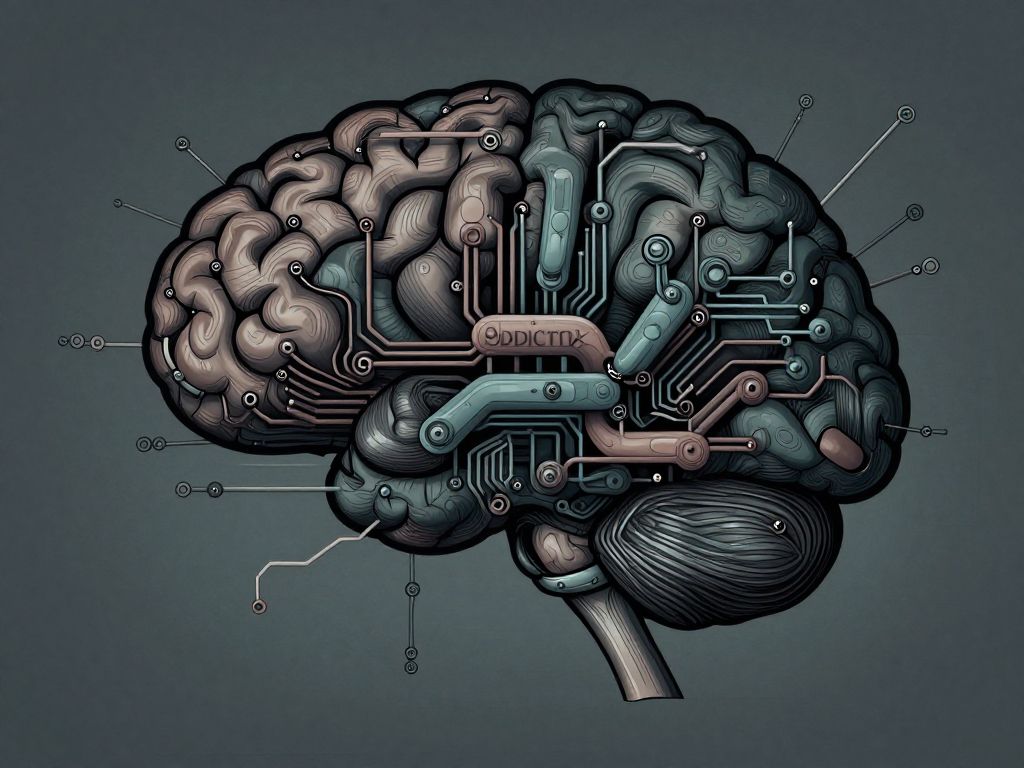
What Does Gooning Mean?
Gooning is an internet slang term used to describe a prolonged and highly immersive state of sexual stimulation. People usually use it to describe being deeply absorbed in the experience, often for an extended period of time, with reduced awareness of surroundings or time passing.
The term does not come from psychology or medicine. It originated in online communities. However, the way people describe gooning overlaps with concepts that have been studied in neuroscience and behavioral research, especially around attention, reward, and repetition.
How the Term Is Used Online
In everyday online usage, gooning usually refers to a state rather than a specific action. Common elements include:
- Long sessions rather than short bursts
- Repetitive or rhythmic stimulation
- Strong mental focus on sensory input
- A feeling of being zoned in or mentally absorbed
People often describe it as being “locked in” or “gone” for a while. The emphasis is on immersion, not just physical sensation.
Where Did the Term Come From?
The word “goon” has existed in English for decades and originally referred to someone foolish or clumsy. In internet subcultures, the meaning shifted. It started being used to describe someone who appeared mentally checked out or entranced.
Over time, the verb “gooning” emerged to describe the experience itself. As the term spread through forums, meme culture, and social platforms, its meaning became more specific and more closely associated with prolonged stimulation and altered attention.
How Gooning Relates to Reward and Attention
Although gooning is not a scientific term, researchers have studied how the brain responds to repetitive and highly stimulating experiences.
The brain’s reward system, especially pathways involving dopamine, plays a major role in reinforcing behaviors that feel motivating or pleasurable. Dopamine helps signal what is worth repeating and strengthens attention toward rewarding stimuli, as described in neuroscience research on reward learning and motivation
https://pmc.ncbi.nlm.nih.gov/articles/PMC3358742/
Brain imaging studies also show that sexual stimuli activate reward-related regions such as the nucleus accumbens, even when processed with minimal conscious awareness
https://www.nature.com/articles/npp201219
This helps explain why some experiences feel absorbing and difficult to disengage from, especially when stimulation is repeated or highly focused.
Compulsive Sexual Behavior and Context
Some discussions of gooning reference concerns about compulsion. While gooning itself is not a diagnosis, research on compulsive sexual behavior offers relevant context.
Compulsive sexual behavior is generally described as persistent sexual thoughts or behaviors that feel difficult to control and may interfere with daily life. Reviews of the research note changes in brain activity in areas related to reward processing and impulse regulation
https://pmc.ncbi.nlm.nih.gov/articles/PMC4677151/
Additional studies suggest that people who struggle with compulsive sexual behavior can show heightened reactivity to sexual cues, similar to patterns seen in other reward-driven behaviors
https://pmc.ncbi.nlm.nih.gov/articles/PMC9295238/
Medical organizations such as the Mayo Clinic describe compulsive sexual behavior as a pattern that can become distressing or disruptive for some individuals, while also noting that not all repetitive sexual behavior is problematic
https://www.mayoclinic.org/diseases-conditions/compulsive-sexual-behavior/symptoms-causes/syc-20360434
Gooning vs Edging
Gooning is often mentioned alongside edging, but the two are not the same.
Edging refers to deliberately delaying orgasm in order to prolong stimulation. It is a specific technique. Gooning, on the other hand, describes a mental and experiential state. Edging may be part of a gooning session for some people, but it is not required.
A more detailed comparison is covered here
Read: Gooning vs Edging →
Why the Term Became Controversial
The term has attracted attention because it appears in discussions about overstimulation, habit formation, and attention regulation.
Research on reward variability and repetition shows that unpredictable or frequent rewards can strengthen reinforcement loops in the brain
https://www.sciencedirect.com/science/article/pii/S0306460323000217
This helps explain why some people find it easy to lose track of time or feel pulled to continue once deeply engaged. That does not automatically make the behavior unhealthy, but it explains why the topic often comes up in discussions about balance and self-control.
What Gooning Is Not
Gooning is not a medical diagnosis. It does not appear in diagnostic manuals such as the DSM-5 or ICD-11. Researchers instead focus on broader concepts like reward learning, attention, and behavioral reinforcement
https://www.mayoclinic.org/diseases-conditions/compulsive-sexual-behavior/diagnosis-treatment/drc-20360453
Summary
- Gooning is an internet slang term describing prolonged and immersive stimulation
- It is not a medical or psychological diagnosis
- Research on dopamine, reward systems, and compulsive behavior helps explain why such experiences can feel absorbing
- Context matters, and experiences vary widely between individuals
This article is intended for educational and informational purposes only.